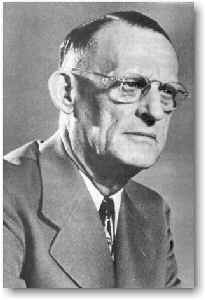
DR. BOB EXPLAINS HIS UNDERSTANDING
OF AA ANONYMITY
(Dr. Bob And The Good Oldtimers: Pages 264 & 265)
Warren recalled, "He [Dr. Bob] said there were two ways to break the Anonymity Tradition: (1) by giving your name at the public level of press or radio; (2) by being so anonymous that you can't be reached by other drunks."
"As far as anonymity was concerned we knew who we were. It wasn't only A.A., but our social life. All of our lives seemed to be spent together. We took people home with us to dry out. The Cleveland group had the names, addresses, and phone numbers of all the members," said Warren. "In fact, I remember Dr. Bob saying, .....
'If I got up and gave my name as Dr. Bob S., people who needed help
would have a hard time getting in touch with me.'"
"Since our Tradition of Anonymity designates the exact level where the line should be held, it must be obvious to everyone who can read and understand the English Language that to maintain Anonymity at any other level is definately a
Violation of this Tradition."
"The AA who hides his identity from his fellow AAs by using only a given name Violates The Tradition just as much as the AA who permits his name to appear in the press in connection with matter pertaining to AA."
"The former is maintaining his anonymity ABOVE the level of press, radio and films, and the latter is maintaining his anonymity BELOW the level of press, radio and films---whereas the tradition states that we should maintain our anonymity 'AT' the level of press, radio and films."
Ernie G. of Toledo, commenting on what he saw to be an increase of anonymity within A.A. today as compared with the old days, said, "I made a lead [trip to bring message] over to Jackson [Michigan] one night, and everybody's coming up to me and saying, 'I'm Joe; 'I'm Pete.' Then one of the guys said, 'Safe journey home. If you get into any trouble, give me a buzz.'
Later, I said to the fellow who was with me, 'You now, suppose we did get into trouble on the way home. How would we tell anyone in A.A.? We don't know anyone's last name.' They get so doggone carried away with this anonymity that it gets to be a joke."
I had a book [evidently one of the small address books compiled by early members or their wives]
with the first hundred names--first and last--telephone numbers, and where they lived.
Dr. Bob's views on anonymity remained clear in the recollections of Akron's Joe P. [The Dartmouth grad]. Though it was not the custom in the mid-1940's to give A.A. talks to anyone except drunks, Joe noted, a few members formed an unofficial public information committee that started to speak to Rotary and Kiwanis Clubs throughout the state.
By: rf. hale
Anonymity
Dr. Bob was the teacher, not Bill.
Also, what is the spiritual value of anonymity?
How does anonymity help our selfworth?
Do we remain secret, in our communities?
Our fellowship has evolved to the lowest common denominator in its definition and practice of anonymity.
This is probably due to the large amount of newcomers who are naturally reluctant to disclose much about themselves initially. To a large degree though, it is also due to a lack of knowledge or diligence by the old-timers in instructing the newcomers.
For the newcomer who is scared to death and reluctant to disclose himself the anonymity tradition can be easily confused as a veil of secrecy to hide behind, sometimes forever. To the old-timer anonymity all to often just means not using your last name at the level of press, radio, television and films. The first is a complete misunderstanding of anonymity and the second is a severely limited model of the breadth and depth of this very spiritual tradition.
No one demands that the newcomer tell all about himself in his first meeting. We understand the need to take time to identify and to begin to feel secure. We also understand the need for members to practice patience and tolerance with newcomers. They are sometimes on very thin emotional ice and we do not want to destroy what little faith they have in AA by making too many demands on them too soon. The fear of exposure is a very real fear. Most newcomers believe that if their community knew they were coming to AA they would be ruined financially, or at the very least they would be mocked publicly as being emotionally weak. They are naturally very reluctant to risk this emotional pain.
When we speak of certain AA members breaking the tradition by being anonymous below the level of press, radio and film, we are speaking about people who have been around long enough to begin working the steps and becoming responsible AA members and still stay anonymous (secret) in their own communities. We are talking about people who have had a chance to get their spiritual feet on the ground and who now have a support system behind them.
It is in this population that a lack of understanding of anonymity becomes an obstruction to living a more spiritual life--and of helping newcomers do the same.
By this time we should be grateful for our delivery from alcoholism and willing enough to help others that we don't mind others knowing we are alcoholic. Trying to keep our disease a secret seems to say that we really don't think it is a disease. If it were, why be secretive? When we incorrectly apply the principle of anonymity to our lives (and remain secret in our communities), we cut ourselves off from the "Sunlight of the Spirit." If we do not allow our victory over alcohol through AA to be known, then how are we going to be of help to others? How can they come to us for help when they don't know what we have to offer?
Father John Powell's best selling book is entitled: "Why Am I Afraid To Tell You Who I Am?" It speaks to the point that until we can feel fully loved, we have to believe we are fully understood, and to be fully understood we have to have shared our darkest secrets with at least one other person.
At the level of our communities we do not share our darkest secrets but we do share the fact that we were alcoholic and that we recovered in AA. Being exposed as what we are, instead of what we want others to think we are, gives our friends and neighbors an opportunity to see and judge us in a new light.
Now they can curse us, laugh at us, or ignore us. Unfortunately, this is what most AA's think will happen. Not so. Invariably they come and congratulate us on our recovery and compliment us on our new lifestyle. After hearing this from a throng of neighbors and friends we come to believe and accept that we are OK, alcoholism and all. This is the situation we must create for ourselves if we are to walk in the sunlight of the spirit.
It is in this manner that we demonstrate the principles of AA in our daily lives for others to see and judge. If they like what they see, and if they or one of their friends needs help, they can come to us or go directly to AA. It sounds so simple to be saying this but this is the primary way we carry the message.
But what happens if we remain secret, or as secret as possible, in our communities? In these circumstances we live in a state of perpetual anxiety. After all, who can be really comfortable hiding his identity as an alcoholic knowing that at any minute someone may walk up to him and confront him with the fact that he has been "found out." Of course this rarely happens but
we always fear that "someone will learn the truth about us and that the truth will be bad."
Before going further it might bode well for us to examine an authority on anonymity. Let us look at what Dr. Bob Smith, co-founder of Alcoholics Anonymous, had to say about anonymity. In doing so we need to bear in mind that it was Dr. Bob who maintained his anonymity while Bill was recklessly breaking his anonymity in a quest for stardom. Much was written by Bill on this subject
after Dr. Bob died
but no one disputed who the authority was on anonymity while Dr. Bob was still alive.
It was Dr. Bob Smith who, on his death bed counseled Bill, "let's you and me get buried just like everyone else." Dr. Bob also counseled others about anonymity. He is quoted in Dr. Bob and the Good Oldtimers as saying: "Since our tradition on anonymity designates the exact level where the line should be held, it must be obvious to everyone who can read and understand the English language that to maintain anonymity at any other level is definitely a violation of this Tradition.
"The AA who hides his identity from his fellow AA by using only a given name violates the Tradition just as much as the AA who permits his name to appear in the press in connection with matters pertaining to AA."
"The former is maintaining his anonymity below the level of press, radio, and films, and the latter is maintaining his anonymity above the level of press, radio, and films--whereas the Tradition states that we should maintain our anonymity at the level of press, radio, and films."
These two pages give a perfect example of why we cannot be anonymous in our own groups and meetings.
If we are anonymous at this level,
(below the level of press, radio, and film)
we are not making ourselves spiritually available to our fellowman.
If we understand that the
measure of our spirituality is exactly parallel to our availability to our fellowman.
If we believe our book is correct when it says the only purpose of the program is to
"make us of maximum service to God and our Fellow Man, then we must come to a new and more enlightened understanding about anonymity.
Again, we can hardly be of help if our own fellowship doesn't know how to get in touch with us. By extension we cannot reach other suffering alcoholics by referral if our nonalcoholic friends and neighbors do not know that we are alcoholic and have "recovered from a seemingly helpless state of mind and body." They simply would not know where to send loved ones for help if we remain anonymous at this level. At the person to person and the neighborhood level being anonymous is the same as being secret and this is the exact opposite of carrying the message.
It is often said that we must always act as a good example of Alcoholics Anonymous because we may be the only copy of the big book that someone may ever see. But how will they know that we are an example of the big book if they do not know we are alcoholic?
It should be obvious that we must be identified with both Alcoholics Anonymous as well as with Spiritual Living in order to attract others to AA and recovery. Again; how can we be a program of attraction to AA if the people in our communities do not know we belong to AA?
Why then the big deal about anonymity? Our 12th tradition explains what is meant. It reads: "Anonymity is the spiritual foundation of all our traditions, ever reminding us to place principles before personalities." In the long form it goes on to say that "we are to practice a genuine humility Just how do we do this?
First, we do not go public at the level of press, radio and film to prevent our galloping ego's from getting out of control, but there is something far more important than that. That thing is keeping our good deeds and our good works anonymous.
Human nature is sometimes a strange thing. It seems almost natural for alcoholic and nonalcoholic alike to want to be loved and admired. One of the ways we attempt to get this love and admiration is in letting our good deeds be known to our fellows so that we are elevated in their appraisal of us. At times we very cunningly "admit" that so-and-so was in trouble and it fell on us to rescue him from one peril or another. Very quietly we go about the process of elevating ourselves, rarely realizing that we are doing so at the expense of the fellow we are professing to have helped.
The flip side of the coin is that we have gossiped about a frailty or shortcoming of one of our fellow man. Thus we have defamed or ridiculed him. At the very least we have lowered his character and prestige compared to our own. This insidious, gossiping behavior can be prevented if only we only keep our good deeds anonymous. This is the main feature of anonymity. Now a couple of questions seem to present themselves.
How may times do your hear your fellow alcoholics talk of Jim A. etc in meetings? The measure here is a direct measure of our adherence to the Tradition of anonymity.
How many times to you hear your fellow alcoholics talk of the good deeds they have done? Again we can measure our progress in practicing anonymity simply by listening and taking stock of how well we keep our good deeds to ourselves as a society.
It might bode well for AA for us to go back to the drawing board and study the real meaning of anonymity and its implications for us as a fellowship. But first we must ask ourselves: Just what kind of anonymity is being practiced here?
Introduction
A FURTHER VIEW ON ANONYMITY
In part, taken from the GSO Public Information Workbook
An understanding of anonymity in AA is the first prerequisite for being effective in public information. At first glance the terms anonymity and public information seem to contradict each other. Actually, they don't as these selections from the co-founder's writings demonstrate. Bill W. wrote extensively about anonymity, and this selection from the P.I. Workbook is made up of his words. It is divided into three sections. We follow Bill in distinguishing the significance of anonymity at the practical and the spiritual levels, as well as at the individual and the group levels, the private and public, and the local and national. Then, Bill W. takes up the questions of anonymity breaks and their consequences.
"In my belief, the entire future of our fellowship hangs upon this vital principle. If we continue to be filled with the spirit and practice of anonymity, no shoal or reef can wreck us. If we forget this principle, the lid to Pandora's box will be off and the spirits of Money, Power, and Prestige will be loosed among us. Obsessed by these evil genii, we might well founder and break up. I devoutly believe this will never happen. No AA principle merits more study and application than this one. I am positive that AA's anonymity is the key to long-time survival."
Bill's Last Message: "Anonymity has two attributes essential to our individual and collective survival; the spiritual and the practical. On the spiritual level, anonymity demands the greatest discipline of which we are capable; on the practical level anonymity has brought protection for the newcomer, respect and support of the world outside, and security from those of us would use AA for sick and selfish purposes."
Anonymity as a spiritual message: "We are sure that humility, expressed by anonymity, is the greatest safeguard that Alcoholics Anonymous can ever have." ". . .anonymity is real humility at work. It is an all-pervading spiritual quality which today keynotes AA life everywhere. Moved by the spirit of anonymity, we try to give up our natural desires for personal distinction as AA members both among fellow alcoholics and before the general public. As we lay aside these very human aspirations, we believe that each of us take part in the weaving of a protective mantle which covers our whole society and under which we may grow and work in unity."
Sacrifice and Survival: "The spiritual substance of anonymity is sacrifice. Because AA's Twelve Traditions repeatedly ask us to give up personal desires for the common good, we realize that the sacrificial spirits, well symbolized by anonymity, is the foundation of all these Traditions. It is AA's proved willingness to make these sacrifices that give people high confidence in our future."
". . .While it is quite evident that most of us believe in anonymity, our practice of the principle does vary a great deal." "Of course, it should be the privileged, even the right, of each individual or group to handle anonymity as they wish. But to do that intelligently we shall need to be convinced that the principle is a good one for practically all of us; indeed we must realize that the future safety and effectiveness of Alcoholics Anonymous may depend upon its preservation." "It should be the privilege of each individual AA to cloak himself with as much personal anonymity as he desires. His fellow AAs should respect his wishes and help guard whatever status he wants to assume"
Anonymity at the Group Level: "In practice, then, the principle of anonymity seems to come down to this: with one very important exception, the question of how far each individual or group shall go in dropping anonymity is left strictly to the individual or group concerned. The exception is: that all groups or individuals, when writing or speaking for publications as member of Alcoholics Anonymous, feel bound never to disclose their true names. It is at this point of publication that we feel we should draw the line on anonymity. We ought not disclose ourselves to the general public through the media of the press, in pictures, or on the radio."
Anonymity at the Public Level: "Great modesty and humility are needed by every AA member for his own permanent recovery. If these virtues are such vital needs to the individual, so must they be to AA as a whole. This principle of anonymity before the general public can, if we take it seriously enough, guarantee the Alcoholics Anonymous movement these sterling attributes forever. Our public relations policy should mainly rest upon the principle of attraction and seldom, if ever, upon promotion." "The old files at AA headquarters reveal many scores of . . .experiences with broken anonymity. Most of them point up the same lessons. They tell us that we alcoholics are the biggest rationalizers in the world; that fortified with the excuse we are doing great things for AA we can, through broken anonymity, resume our old and disastrous pursuit of personal power and prestige, public honors, and money - the same implacable urges that when frustrated once caused us to drink; the same forces that are today ripping the globe apart at its seams. Moreover, they make clear that enough spectacular anonymity breakers could someday carry our whole society down into the ruinous dead end with them."
Media Attitudes Toward Anonymity: ". . .almost every newspaper reporter who covers us complains, at first, of the difficulty of writing his story without names. But he quickly forgets his difficulty when he realizes that here is a group of people who care nothing for personal gain." "For many years, news channels all over the world have showered AA with enthusiastic publicity, a never-ending stream of it, far out of proportion to the new value involved. Editors tell us why this is. They give us extra space and time because their confidence in AA is complete. The very foundation of that high confidence is, they say, our continual insistence of personal anonymity at the press level."
"Of course, no AA need be anonymous to family, friends, or neighbors . . .But before the general public - press, radio, films, television, and the like - the revelation of full names and pictures is the point of peril. This is the main escape hatch for the fearful destructive forces that still lie latent in us all. Here the lid can and must stay down."
". . .we are certain that if such (worldly) forces ever rule our Fellowship, we will perish too, just as other societies have perished throughout human history. Let us not suppose for a moment that we recovered alcoholics are so much better or stronger than other folks; or that because in twenty years nothing has ever happened to AA, nothing ever can."
"Our really great hope lies in the fact that our total experience, as alcoholics and as AA members, has at least taught us the immense power of these forces of self-destruction. These hard-won lessons have made us entirely willing to undertake every personal sacrifice necessary for the preservation of our treasured Fellowship."
Bill's Experience: ". . .I was once a breaker of anonymity myself. . . I learned that the temporary or seeming good can often be the deadly enemy of the permanent best. When it comes to survival for AA, nothing short of our very best will be good enough."
Rationalization of Anonymity Breaks: ". . .they (anonymity breakers) express the belief that our anonymity Tradition is wrong - at least for them. . . They forget that, during their drinking days, prestige and achievement of worldly ambition were their principle aims. They do not realize that, by breaking anonymity, they are unconsciously pursing those old and perilous illusions once more. They forget that the keeping of one's anonymity often means a sacrifice of one's desire for power, prestige, and money. They do not see that if these strivings became general in AA, the course of our whole history would be changes; that we would be sowing the seeds of our own destruction as a society."
Consequences of Anonymity Breaks: "Anyone who would drop their anonymity must reflect that they may set a precedent which could eventually destroy a valuable principle. We must never let any immediate advantage shake us in our determination to keep intact such a really vital tradition."

© 2003-2018 gts-today all rights reserved